


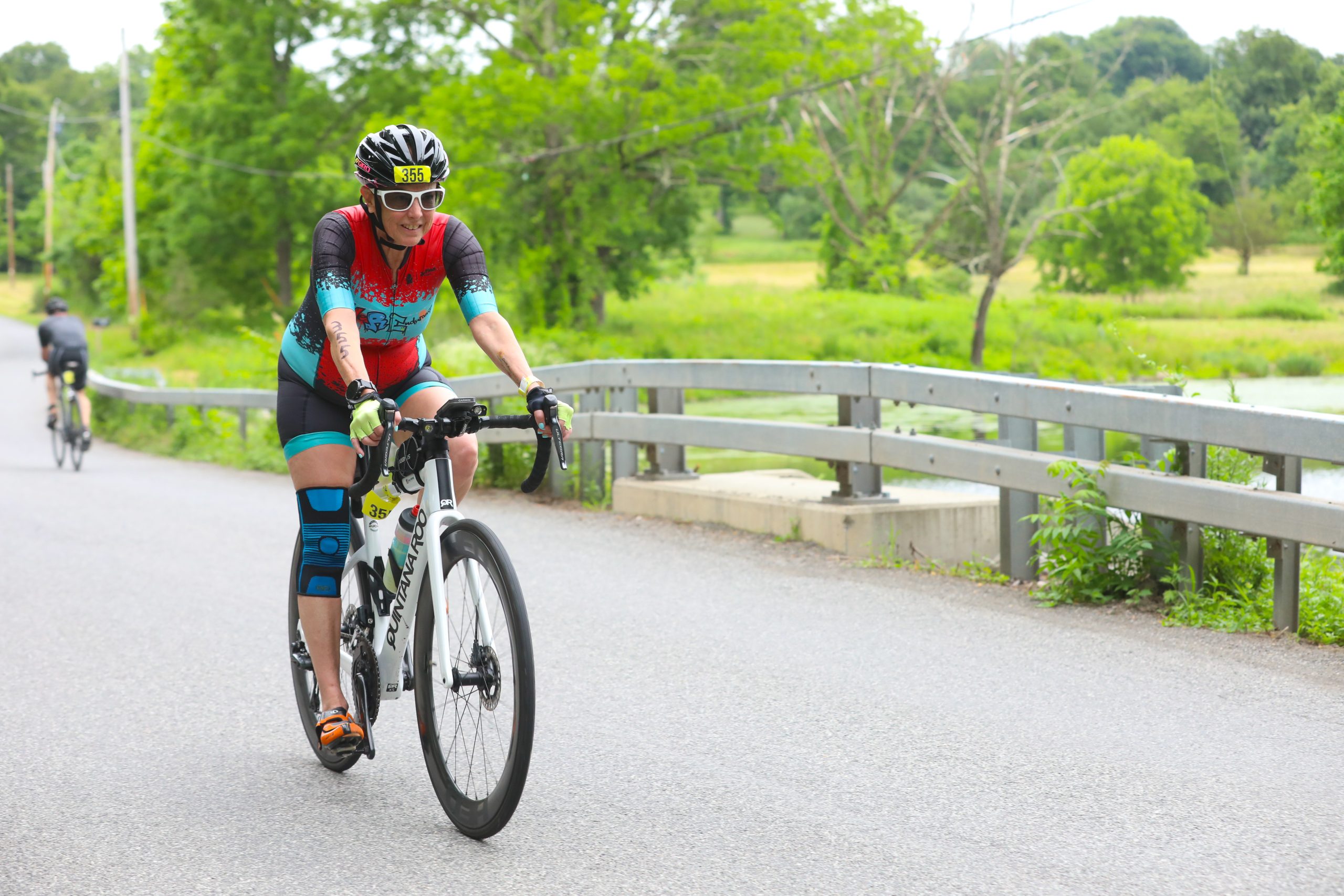

When Hilary JM Topper signed up for her first triathlon at 53, she didn’t count on it to vary her life — or spark a second profession as a triathlon coach, podcast host, and creator of Unlocking the Triathlon: The Newbie’s Information to Competing in a Triathlon.
On this inspiring Q&A, Hilary talks about what drew her to the game, how anybody — at any age or potential degree — can get began, and why triathlon is among the most empowering experiences you’ll ever have.
From balancing coaching with actual life to what gear you really want, her recommendation proves it’s by no means too late to begin one thing new — and uncover simply how robust, succesful, and unstoppable you actually are.

Alison: You competed in your first triathlon at 53 and went on to change into a coach and creator. What made you fall in love with the game, and why do you assume triathlon is such a robust alternative for newcomers who desire a new problem?
Hilary: Competing in my first triathlon at 53 was a transformative expertise. What drew me in was the variety of the game—swimming, biking, and operating every provided distinctive challenges and rewards, conserving the journey thrilling and dynamic. However what actually made me fall in love with triathlon was the sense of accomplishment and neighborhood. Crossing that first end line on the Captiva Tri in Sanabel, Florida, was a second of pure delight. The camaraderie amongst athletes, no matter talent degree, was additionally extremely inspiring.
Triathlon is such a robust alternative for newcomers as a result of it’s greater than only a bodily problem—it’s a psychological and emotional journey. It teaches resilience, time administration, and the enjoyment of pushing previous perceived limits. Plus, the variability in coaching retains it partaking and reduces the chance of burnout or overuse accidents. It’s a sport that welcomes all ages and talents, proving that it’s by no means too late to begin one thing new and obtain one thing extraordinary.
Alison: Coaching for 3 sports activities whereas balancing work, household, and life can really feel intimidating. What recommendation would you give to busy individuals who need to take this on with out it turning into overwhelming?
Hilary: I begin early—day-after-day, I’m away from bed at 4 am and coaching by 5, typically earlier than the solar rises. As soon as I’m carried out, I bathe and head to work, leaving the remainder of the day free for the whole lot else. However I do know not everybody has that flexibility. Many individuals have younger youngsters or early work schedules and may solely practice within the evenings.
In my ebook, Unlocking the Triathlon: The Newbie’s Information to Competing in a Triathlon, I dedicate a bit to balancing coaching with life’s calls for. One of many individuals I interviewed, an Ironman and Kona qualifier, has 4 younger youngsters, works full-time, and coaches on the aspect. Once I requested how she manages all of it, she mentioned she makes time for coaching wherever she will be able to and doesn’t stress over undone chores. She additionally embraces the sacrifices, figuring out that if you actually love the game, you’re keen to let go of some issues to make it occur.
Alison: How a lot time does a newbie realistically want to coach for his or her first dash triathlon, and what ought to a pattern coaching week seem like?
Hilary: A newbie wants about half-hour of coaching a day to begin, regularly constructing as much as round 2 hours a day for a dash triathlon. The longer coaching periods are sometimes reserved for weekends. I at all times suggest newcomers begin with a dash triathlon, which could embody a 400-meter swim, a 10-mile bike journey, and a 5K run—although distances can differ relying on the occasion.
Right here’s an instance of a beginner-friendly coaching week:
- Monday – Off day
- Tuesday – Bike for 1 hour
- Wednesday – Swim as much as 600 meters (the ebook begins with 200 meters and regularly will increase endurance every week)
- Thursday – Run 2 miles
- Friday – Swim as much as 600 meters
- Saturday – Lengthy bike journey, 1.25 hours
- Sunday – Future, 2.5 miles
Alison: What are among the greatest errors you see first-time triathletes make in coaching, and the way can they keep away from them?
Hilary: One of many greatest errors I see first-time triathletes make is doing an excessive amount of, too quickly. It’s straightforward to get excited and overtrain, which might result in burnout or harm. To keep away from this, newcomers ought to observe a structured coaching plan that regularly builds endurance and depth. Relaxation days are simply as essential as coaching days—they permit your physique to get well and get stronger.
One other widespread mistake is neglecting one of many disciplines. Many newcomers give attention to their strongest sport and keep away from their weakest, however triathlon is about steadiness. Spend additional time enhancing your weakest space, whether or not it’s swimming, biking, or operating, to construct confidence and general efficiency.
Vitamin is one other space the place first timers typically battle. Coaching isn’t just in regards to the exercises—it’s additionally about fueling your physique correctly. Observe your race-day diet throughout coaching to seek out what works for you and keep away from surprises on race day.
Lastly, don’t overlook to follow transitions. Many newcomers overlook this, however clean transitions can save worthwhile time and scale back stress in the course of the race. Arrange a mini transition space at dwelling or on the park and follow transferring from swim to bike and bike to run. (One in every of my athletes was speaking a lot to different athletes throughout transition that he ended up DNF’ing the race. DNF means Did Not End.)
Alison: Gear may really feel overwhelming—bikes, wetsuits, tri kits, and extra. What do first-time triathletes really must get began, and what can they skip at first?
Hilary: You don’t want an costly bike. Gwen Jorgensen, US Olympic Gold Medalist, shared in Unlocking the Triathlon that she used her mom’s mountain bike for her first race. One other age-group triathlete informed me he borrowed a mountain bike with a chewed-up seat that the canine had bitten off. The hot button is to make use of no matter bike you’ve entry to—you don’t want an influence meter or clip-in pedals both. Flat pedals work simply positive.
Earlier than my first triathlon, my coach informed me I wanted a carbon-fiber highway bike, an costly wetsuit, an influence meter, and extra. I spent a fortune that first yr, however fortunately, I fell in love with the game, so it was value it. For somebody simply beginning out, although, I’d say: borrow a motorcycle, purchase a used wetsuit, and spend money on a fundamental tri package. The great thing about triathlon is that you could begin with the fundamentals and improve as you go. Give attention to having fun with the expertise and constructing your abilities first—fancy gear can come later.
Alison: There are a whole lot of races on the market. How can somebody select the fitting first triathlon that units them up for a constructive expertise?
Hilary: In my ebook, Unlocking the Triathlon, I speak about this rather a lot. A few of my suggestions embody:
- Search for a sprint-distance triathlon or perhaps a super-sprint. These shorter races are beginner-friendly and fewer intimidating, providing you with an opportunity to ease into the game with out feeling overwhelmed.
- Select a race near dwelling. Touring to your first triathlon can add pointless stress, from packing gear to navigating an unfamiliar course. (Once I traveled to Florida for my first race, it was ridiculously irritating. If I knew that there have been native races like EventPower LI, I might have caught nearer to dwelling.)
- If swimming is your greatest problem, discover a race with a pool swim or a relaxed, shallow lake. Keep away from open-water swims within the ocean or rivers with robust currents to your first race.
- Analysis the course. A flat bike and run course are perfect for newcomers, as hilly or technical routes will be harder. Many race web sites present course maps and elevation profiles.
- Think about the dimensions of the occasion. Smaller races typically really feel extra welcoming and fewer chaotic, whereas bigger races will be overwhelming for a primary timer.
- Give your self sufficient time to coach. Select a race that’s at the very least 12-20 weeks away so you may put together correctly and construct confidence.
- Ask round! Native triathlon golf equipment or on-line boards can supply nice insights into beginner-friendly races in your space.
Alison: For individuals who might not consider themselves as “athletes,” how can coaching for a triathlon rework the best way they see their our bodies and their capabilities?
Hilary: I by no means noticed myself as an athlete both, however coaching for a triathlon utterly modified how I view myself, my physique, and my talents. Triathlons are some of the inclusive sports activities on the market—they’re open to individuals of all physique varieties, ages, and backgrounds. Whether or not you’re 18 or 85, a triathlon welcomes you to the beginning line. (I met a lady named Sybil on the final triathlon I did. She was 85 years outdated and very inspiring!)
Coaching for a triathlon shifts the main target out of your look to what your physique can do. You start to understand your power, endurance, and resilience in methods you by no means thought attainable. It’s not about being the quickest or fittest—it’s about displaying up, placing within the effort, and crossing that end line. Each small victory, whether or not it’s swimming a little bit farther, biking up a hill you as soon as averted, or operating your first mile, boosts confidence and delight.
Triathlon coaching additionally teaches you to embrace challenges and push previous limits you didn’t assume you may overcome. It’s a journey of self-discovery that proves you’re able to way more than you give your self credit score for. And the very best half? The triathlon neighborhood is extremely supportive, cheering you on each step of the best way.
For anybody who doesn’t see themselves as an athlete, I’d say this: You don’t should be an athlete to begin, however you’ll really feel like one by the point you end.
Alison: If somebody is studying this and simply considering, “I don’t even know the place to begin,” aside from shopping for your ebook (which I extremely suggest they do), what’s the very first step they need to take towards turning into a triathlete?
Hilary: Simply soar in and join a race! Committing to an occasion offers you a transparent objective to work towards and makes the journey really feel actual. It doesn’t should be a giant race—begin with an area dash triathlon or perhaps a super-sprint. When you’ve signed up, you’ll have a date on the calendar and a motive to begin coaching.
From there, take it one step at a time. Start with what you already know—for those who’re comfy operating, begin with quick runs. If swimming feels intimidating, discover a native pool or swim coach that will help you get began. And don’t fear about having all the flamboyant gear—use what you’ve and improve later for those who fall in love with the game.
Crucial factor is to begin. You don’t have to be in excellent form or have all of the solutions instantly. Triathlon is a journey, and each athlete—irrespective of how skilled—was as soon as a newbie. Signing up is the primary leap of religion, and from there, you’ll uncover simply how succesful you’re.
Alison: Lastly, for somebody studying this who’s curious however nonetheless on the fence, what’s the one factor you’d say to encourage them to enroll in their first triathlon?
Hilary: You’ll by no means know what you’re able to till you attempt. Signing up to your first triathlon isn’t nearly finishing a race—it’s about discovering a stronger, extra assured model of your self. It’s about proving to your self that you could tackle a problem, step outdoors your consolation zone, and obtain one thing extraordinary. I at all times say, if I can do it, you may too!

